Domain bassmusic.de kaufen?
Wir ziehen mit dem Projekt
bassmusic.de um.
Sind Sie am Kauf der Domain
bassmusic.de interessiert?
domain@kv-gmbh.de · 0541-91531010
Domain bassmusic.de kaufen?
Wie tief muss der Filter im Aquarium sein?
Wie tief der Filter im Aquarium sein sollte, hängt von verschiedenen Faktoren ab, wie beispielsweise der Größe des Aquariums, der Art der Fische und der Menge an Schmutz, die im Wasser vorhanden ist. Im Allgemeinen wird empfohlen, den Filter so tief wie möglich im Aquarium zu platzieren, um eine effiziente Reinigung des Wassers zu gewährleisten. Es ist wichtig, darauf zu achten, dass der Filter genügend Platz hat, um ordnungsgemäß zu funktionieren und nicht durch Pflanzen oder Dekorationen blockiert wird. Es ist ratsam, die Anweisungen des Herstellers des Filters zu beachten, um sicherzustellen, dass er korrekt installiert ist und optimal arbeitet. Letztendlich sollte die Platzierung des Filters darauf abzielen, eine gute Wasserqualität im Aquarium aufrechtzuerhalten und das Wohlbefinden der Fische zu gewährleisten. **
Wie tief setzt man einen Filter im Aquarium ein?
Um einen Filter im Aquarium richtig einzusetzen, sollte er so tief wie möglich im Wasser platziert werden, um eine effiziente Filtration zu gewährleisten. In der Regel wird empfohlen, den Filter mindestens bis zur Hälfte oder sogar bis zum Boden des Aquariums einzutauchen. Dadurch wird sichergestellt, dass das Wasser gleichmäßig durch den Filter strömt und Schmutzpartikel effektiv herausgefiltert werden. Es ist wichtig, den Filter regelmäßig zu reinigen und zu warten, um eine optimale Leistung zu gewährleisten. Es ist ratsam, die Anweisungen des Herstellers zu befolgen, um sicherzustellen, dass der Filter korrekt eingestellt und betrieben wird. **


Ähnliche Suchbegriffe für Filter
Top-Angebote
Produkte zum Begriff Filter:
-
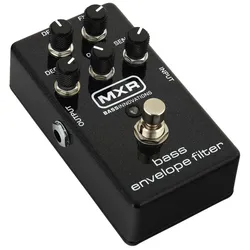
Dunlop M-82 Bass Envelope FilterMXR M-82 Bass Envelope Filter Der MXR M-82 Bass Envelope Filter besticht durch seinen Klang und die allseits bekannte MXR Qualität. MXR M-82 Bass Envelope Filter: Bass Effekt Analoger Envelope Filter True Bypass Regler: Dry, FX, Decay, Q und Sens Stromversorgung: 9 Volt Batterie oder Netzteil (optional) The MXR M82 is an analog envelope filter designed to preserve the instrument’s natural character while adding a wah effect to the signal. It boasts a sparkle-purple finish, five knobs, and a true-bypass footswitch. Overall, this pedal feels quite sturdy, and it’s a bit smaller than most stompboxes. The M82 is powered by a 9-volt battery or an optional power supply. Accessing the battery requires removing the bottom plate, which is less convenient than a pop-out battery box. Removing this plate, I found a bright red circuit board filling most of the box, with just enough room to house the 9-volt cell. The pedal’s five knobs are grouped into two rows. On the top row, the FX knob controls the level of effect, while the Dry knob sets the level of the unprocessed original signal. This is really important for bass, because as the filter sweeps upward, the note’s bottom end drops away. The Dry knob lets you keep the lows by blending in straight bass tone. The three knobs on the lower row— Decay, Q, and Sensitivity—shape the effect itself. Decay sets the floor frequency for the wah effect. When a filter sweeps upward on a note’s attack, it then heads back down to where it started. As you turn Decay clockwise, the less downward sweep you hear. Conversely, lower Decay settings cause deeper filter plunges. Below noon, a note sweeps quite low before the filter releases. The M82’s manual explains that the Q control adjusts the “intensity” of the effect, but the control actually seems to influence the width of the frequency sweep. At lower Q settings, the filter sweeps a narrower band of frequencies. At higher Q settings, the filter covers a wider range. The final control is Sensitivity. This knob is key to achieving adequate quack. Essentially, Sensitivity influences how easily your note attack sweeps the filter. Raising the sensitivity lets you trigger the wah effect with a lighter attack. But if you play hard or your bass has hot pickups, setting the sensitivity too high can leave all your notes at the high end of the filter’s sweep. High Sensitivity settings also tend to emphasize string noise more than I’d like. Twirling the Knobs The M82’s instruction pamphlet offers three sample settings, and I immediately went for “Bubble Funk,” which is described as “classic ’70s funk.” It’s that burpy, quacky sound that makes you want to put on a paisley polyester shirt with a big collar, turn on a strobe light, and have a blast boogying! The best part is that the M82 accomplishes that funk sound in a way that sounds natural instead of overprocessed. I liked the initial sound, but I liked it even more when I brought up the Decay a bit so it didn’t sweep quite so low and backed off the Sensitivity so it didn’t feel too compressed. The other two sample settings—“Bottom Dweller,” which served up mainly the note’s fundamental, and “Gorilla Biscuit,” which seemed a little too thin to hold up a bass line— didn’t quite do it for me, but it I found that subtle tweaking of both yielded usable results with a lot of potential. Setting the M82’s controls is like most envelope filters I’ve played. It takes careful experimenting to get the sound you’re after, and it’s easy to miss and brew up an unwanted sound. Because envelope filters are touch sensitive and their response varies by the strength of the instrument’s output, adjusting the pedal is not a one-size- fits-all proposition. But that’s the trade-off for analog envelope filters in general. Digital envelope filters typically have an easier setup, but the resulting sound usually isn’t quite as satisfying as with analog units like the M82.195,00 €*Versand: 0,00 €Sichere Weiterleitung zum Anbieter
-
Yuer RS-27 Bass Filter WahYuer RS-27 Bass Filter Wah; Effektpedal für E-Bass; Bass Filter Wah Pedal aus der RS-10 Serie; analoger dynamischer Bandpass-Filter; Auto-Wah Effekt; True Bypass; Regler für Range, Reso und Intensity; Minischalter für Fuzz / Clean Modus; Status LED; Bypass Fußschalter; Aluminium-Gehäuse; 6,3 mm Mono-Klinken Ein- / Ausgang; Stromversorgung via optionalem 9 V DC Netzteil, 2,1 mm x 5,5 mm Hohlstecker, Polarität (-) innen; Batteriebetrieb wird nicht unterstützt; Stromaufnahme 8 mA; Abmessungen (L x B x H) 92 x 49 x 46 mm; Gewicht 165 g28,00 €*Versand: 0,00 €Sichere Weiterleitung zum Anbieter



-
Welchen Filter 2?
Es tut mir leid, aber ich verstehe nicht genau, was Sie mit "Filter 2" meinen. Könnten Sie bitte weitere Informationen geben, damit ich Ihnen besser helfen kann? **
-
Was sind Beats mit Bass?
Beats mit Bass sind Musikstücke oder Beats, die einen besonders starken und präsenten Bass-Sound haben. Der Bass wird dabei oft betont und kann sowohl durch tiefe Töne als auch durch eine starke Bassline oder Bassdrum hervorgehoben werden. Solche Beats werden oft in Genres wie Hip-Hop, Trap oder Dubstep verwendet, um einen energiegeladenen und basslastigen Sound zu erzeugen. **
-
Wie beeinflusst der Rhythmus und die Melodie eines Beats die Stimmung und den emotionalen Ausdruck eines Musikstücks?
Der Rhythmus eines Beats kann die Stimmung eines Musikstücks stark beeinflussen, indem er das Tempo und die Energie des Songs bestimmt. Ein schneller und treibender Rhythmus kann eine fröhliche und aufregende Stimmung erzeugen, während ein langsamer und ruhiger Rhythmus eher eine melancholische oder entspannte Atmosphäre schafft. Die Melodie eines Beats trägt ebenfalls zur emotionalen Wirkung bei, indem sie die harmonischen und melodischen Elemente des Songs definiert. Eine eingängige und melodische Melodie kann eine positive und mitreißende Stimmung erzeugen, während eine düstere oder dissonante Melodie eher eine traurige oder bedrohliche Atmosphäre schafft. Insgesamt können Rhythmus und Melodie zusammenarbeiten, um die emotionale Wirkung eines Musikstücks **
-
Wie beeinflusst der Rhythmus und die Melodie eines Beats die Stimmung und den emotionalen Ausdruck eines Musikstücks?
Der Rhythmus eines Beats kann die Stimmung eines Musikstücks stark beeinflussen, indem er das Tempo und die Energie des Songs bestimmt. Ein schneller, treibender Rhythmus kann eine aufgeregte oder euphorische Stimmung erzeugen, während ein langsamerer Rhythmus eine ruhige oder melancholische Atmosphäre schaffen kann. Die Melodie eines Beats trägt ebenfalls zur emotionalen Wirkung bei, indem sie bestimmte Tonhöhen und Harmonien verwendet, um Gefühle wie Freude, Trauer oder Spannung zu vermitteln. Zusammen können Rhythmus und Melodie die emotionale Tiefe eines Musikstücks verstärken und die Hörer auf eine bestimmte emotionale Reise mitnehmen. **


Was zeichnet den typischen Sound und Rhythmus der Reggae-Musik aus?
Der typische Sound der Reggae-Musik zeichnet sich durch den Einsatz von Offbeat-Akzenten auf der Zwei und Vier im Takt aus. Der Rhythmus wird oft von einem markanten Bassline und einem charakteristischen Gitarrenskank begleitet. Reggae-Musik ist außerdem bekannt für ihre entspannte und positive Stimmung. **
Wie kann man Snapchat-Filter oder ähnliche Filter ohne Snapchat nutzen?
Es gibt verschiedene Apps und Programme, die ähnliche Filter wie Snapchat anbieten, wie zum Beispiel Instagram, Facebook oder TikTok. Diese Plattformen haben eigene Filter und Effekte, die du nutzen kannst, um deine Fotos und Videos zu verschönern. Es gibt auch spezielle Filter-Apps, die unabhängig von sozialen Medien funktionieren und eine Vielzahl von Filtern und Effekten bieten. **
Top-Angebote
Produkte zum Begriff Filter:
-
Rhythmus Club BongoDas Remo Rhythmus Club Bongo bietet Kindern ab 3 Jahren einen spielerischen Einstieg in die Welt der Percussion. Mit Acousticon Kesseln und Renaissance Fellen liefert es professionellen Sound, der jungen Musikern Freude bereitet und das Rhythmusgefühl stärkt.47,00 €*Versand: 0,00 €Sichere Weiterleitung zum Anbieter
-
Mooer Audio Sweeper - Bass FilterDynamic envelope filter pedal for both bass and guitar Unique Funky style filter tone, Clean and Fuzz sweeping switch Full metal shell Very small and exquisite True bypass DC 9V Adapter power supply Working Modes: 2(Clean/Fuzz) Input: 1/4” monaural jack (impedance: 220k Ohms) Output: 1/4” monaural jack (impedance: 1.4k Ohms) Power Requirements: AC adapter 9V DC (center minus plug) Current Draw: 7 mA Dimensions: 93.5mm (D) × 42mm (W) × 52mm (H) Weight:160g Sweeper Owner's Manual59,00 €*Versand: 0,00 €Sichere Weiterleitung zum Anbieter
-
Dunlop M-82 Bass Envelope FilterMXR M-82 Bass Envelope Filter Der MXR M-82 Bass Envelope Filter besticht durch seinen Klang und die allseits bekannte MXR Qualität. MXR M-82 Bass Envelope Filter: Bass Effekt Analoger Envelope Filter True Bypass Regler: Dry, FX, Decay, Q und Sens Stromversorgung: 9 Volt Batterie oder Netzteil (optional) The MXR M82 is an analog envelope filter designed to preserve the instrument’s natural character while adding a wah effect to the signal. It boasts a sparkle-purple finish, five knobs, and a true-bypass footswitch. Overall, this pedal feels quite sturdy, and it’s a bit smaller than most stompboxes. The M82 is powered by a 9-volt battery or an optional power supply. Accessing the battery requires removing the bottom plate, which is less convenient than a pop-out battery box. Removing this plate, I found a bright red circuit board filling most of the box, with just enough room to house the 9-volt cell. The pedal’s five knobs are grouped into two rows. On the top row, the FX knob controls the level of effect, while the Dry knob sets the level of the unprocessed original signal. This is really important for bass, because as the filter sweeps upward, the note’s bottom end drops away. The Dry knob lets you keep the lows by blending in straight bass tone. The three knobs on the lower row— Decay, Q, and Sensitivity—shape the effect itself. Decay sets the floor frequency for the wah effect. When a filter sweeps upward on a note’s attack, it then heads back down to where it started. As you turn Decay clockwise, the less downward sweep you hear. Conversely, lower Decay settings cause deeper filter plunges. Below noon, a note sweeps quite low before the filter releases. The M82’s manual explains that the Q control adjusts the “intensity” of the effect, but the control actually seems to influence the width of the frequency sweep. At lower Q settings, the filter sweeps a narrower band of frequencies. At higher Q settings, the filter covers a wider range. The final control is Sensitivity. This knob is key to achieving adequate quack. Essentially, Sensitivity influences how easily your note attack sweeps the filter. Raising the sensitivity lets you trigger the wah effect with a lighter attack. But if you play hard or your bass has hot pickups, setting the sensitivity too high can leave all your notes at the high end of the filter’s sweep. High Sensitivity settings also tend to emphasize string noise more than I’d like. Twirling the Knobs The M82’s instruction pamphlet offers three sample settings, and I immediately went for “Bubble Funk,” which is described as “classic ’70s funk.” It’s that burpy, quacky sound that makes you want to put on a paisley polyester shirt with a big collar, turn on a strobe light, and have a blast boogying! The best part is that the M82 accomplishes that funk sound in a way that sounds natural instead of overprocessed. I liked the initial sound, but I liked it even more when I brought up the Decay a bit so it didn’t sweep quite so low and backed off the Sensitivity so it didn’t feel too compressed. The other two sample settings—“Bottom Dweller,” which served up mainly the note’s fundamental, and “Gorilla Biscuit,” which seemed a little too thin to hold up a bass line— didn’t quite do it for me, but it I found that subtle tweaking of both yielded usable results with a lot of potential. Setting the M82’s controls is like most envelope filters I’ve played. It takes careful experimenting to get the sound you’re after, and it’s easy to miss and brew up an unwanted sound. Because envelope filters are touch sensitive and their response varies by the strength of the instrument’s output, adjusting the pedal is not a one-size- fits-all proposition. But that’s the trade-off for analog envelope filters in general. Digital envelope filters typically have an easier setup, but the resulting sound usually isn’t quite as satisfying as with analog units like the M82.195,00 €*Versand: 0,00 €Sichere Weiterleitung zum Anbieter
-
Wie tief muss der Filter im Aquarium sein?
Wie tief der Filter im Aquarium sein sollte, hängt von verschiedenen Faktoren ab, wie beispielsweise der Größe des Aquariums, der Art der Fische und der Menge an Schmutz, die im Wasser vorhanden ist. Im Allgemeinen wird empfohlen, den Filter so tief wie möglich im Aquarium zu platzieren, um eine effiziente Reinigung des Wassers zu gewährleisten. Es ist wichtig, darauf zu achten, dass der Filter genügend Platz hat, um ordnungsgemäß zu funktionieren und nicht durch Pflanzen oder Dekorationen blockiert wird. Es ist ratsam, die Anweisungen des Herstellers des Filters zu beachten, um sicherzustellen, dass er korrekt installiert ist und optimal arbeitet. Letztendlich sollte die Platzierung des Filters darauf abzielen, eine gute Wasserqualität im Aquarium aufrechtzuerhalten und das Wohlbefinden der Fische zu gewährleisten. **
-
Wie tief setzt man einen Filter im Aquarium ein?
Um einen Filter im Aquarium richtig einzusetzen, sollte er so tief wie möglich im Wasser platziert werden, um eine effiziente Filtration zu gewährleisten. In der Regel wird empfohlen, den Filter mindestens bis zur Hälfte oder sogar bis zum Boden des Aquariums einzutauchen. Dadurch wird sichergestellt, dass das Wasser gleichmäßig durch den Filter strömt und Schmutzpartikel effektiv herausgefiltert werden. Es ist wichtig, den Filter regelmäßig zu reinigen und zu warten, um eine optimale Leistung zu gewährleisten. Es ist ratsam, die Anweisungen des Herstellers zu befolgen, um sicherzustellen, dass der Filter korrekt eingestellt und betrieben wird. **
-
Welchen Filter 2?
Es tut mir leid, aber ich verstehe nicht genau, was Sie mit "Filter 2" meinen. Könnten Sie bitte weitere Informationen geben, damit ich Ihnen besser helfen kann? **
-
Was sind Beats mit Bass?
Beats mit Bass sind Musikstücke oder Beats, die einen besonders starken und präsenten Bass-Sound haben. Der Bass wird dabei oft betont und kann sowohl durch tiefe Töne als auch durch eine starke Bassline oder Bassdrum hervorgehoben werden. Solche Beats werden oft in Genres wie Hip-Hop, Trap oder Dubstep verwendet, um einen energiegeladenen und basslastigen Sound zu erzeugen. **
Ähnliche Suchbegriffe für Filter
-
Yuer RS-27 Bass Filter WahYuer RS-27 Bass Filter Wah; Effektpedal für E-Bass; Bass Filter Wah Pedal aus der RS-10 Serie; analoger dynamischer Bandpass-Filter; Auto-Wah Effekt; True Bypass; Regler für Range, Reso und Intensity; Minischalter für Fuzz / Clean Modus; Status LED; Bypass Fußschalter; Aluminium-Gehäuse; 6,3 mm Mono-Klinken Ein- / Ausgang; Stromversorgung via optionalem 9 V DC Netzteil, 2,1 mm x 5,5 mm Hohlstecker, Polarität (-) innen; Batteriebetrieb wird nicht unterstützt; Stromaufnahme 8 mA; Abmessungen (L x B x H) 92 x 49 x 46 mm; Gewicht 165 g28,00 €*Versand: 0,00 €Sichere Weiterleitung zum Anbieter
-
Sonicware LIVEN Bass & BeatsSonicware LIVEN Bass & Beats; Wavetable-Bass-Synthesizer und Groovebox; 2 unabhängige Oszillatoren mit 64 Wavetables, 1 Sub-Oszillator; Noise Generator mit 16 verschiedene Rauscharten; LFO, Hüllkurven Generator, Unisono-Steuerung, Multimode-Filter, Verzerrungseffekte; 64 Bass Presets; 2 Performance-Knöpfe können mehreren Parametern gleichzeitig zugeordnet werden; 2 Assign-Drehregler für die komplexe Steuerung mehrerer Parameter; 350 Beats; 4-16 bit Engine; über 150 Drum Samples; über 50FX Samples; 64-Step Sequencer; Abmessungen(LxBxH): 297 x 176 x 48 mm; Gewicht: 0,8 kg255,00 €*Versand: 0,00 €Sichere Weiterleitung zum Anbieter
-
Wie beeinflusst der Rhythmus und die Melodie eines Beats die Stimmung und den emotionalen Ausdruck eines Musikstücks?
Der Rhythmus eines Beats kann die Stimmung eines Musikstücks stark beeinflussen, indem er das Tempo und die Energie des Songs bestimmt. Ein schneller und treibender Rhythmus kann eine fröhliche und aufregende Stimmung erzeugen, während ein langsamer und ruhiger Rhythmus eher eine melancholische oder entspannte Atmosphäre schafft. Die Melodie eines Beats trägt ebenfalls zur emotionalen Wirkung bei, indem sie die harmonischen und melodischen Elemente des Songs definiert. Eine eingängige und melodische Melodie kann eine positive und mitreißende Stimmung erzeugen, während eine düstere oder dissonante Melodie eher eine traurige oder bedrohliche Atmosphäre schafft. Insgesamt können Rhythmus und Melodie zusammenarbeiten, um die emotionale Wirkung eines Musikstücks **
-
Wie beeinflusst der Rhythmus und die Melodie eines Beats die Stimmung und den emotionalen Ausdruck eines Musikstücks?
Der Rhythmus eines Beats kann die Stimmung eines Musikstücks stark beeinflussen, indem er das Tempo und die Energie des Songs bestimmt. Ein schneller, treibender Rhythmus kann eine aufgeregte oder euphorische Stimmung erzeugen, während ein langsamerer Rhythmus eine ruhige oder melancholische Atmosphäre schaffen kann. Die Melodie eines Beats trägt ebenfalls zur emotionalen Wirkung bei, indem sie bestimmte Tonhöhen und Harmonien verwendet, um Gefühle wie Freude, Trauer oder Spannung zu vermitteln. Zusammen können Rhythmus und Melodie die emotionale Tiefe eines Musikstücks verstärken und die Hörer auf eine bestimmte emotionale Reise mitnehmen. **
-
Was zeichnet den typischen Sound und Rhythmus der Reggae-Musik aus?
Der typische Sound der Reggae-Musik zeichnet sich durch den Einsatz von Offbeat-Akzenten auf der Zwei und Vier im Takt aus. Der Rhythmus wird oft von einem markanten Bassline und einem charakteristischen Gitarrenskank begleitet. Reggae-Musik ist außerdem bekannt für ihre entspannte und positive Stimmung. **
-
Wie kann man Snapchat-Filter oder ähnliche Filter ohne Snapchat nutzen?
Es gibt verschiedene Apps und Programme, die ähnliche Filter wie Snapchat anbieten, wie zum Beispiel Instagram, Facebook oder TikTok. Diese Plattformen haben eigene Filter und Effekte, die du nutzen kannst, um deine Fotos und Videos zu verschönern. Es gibt auch spezielle Filter-Apps, die unabhängig von sozialen Medien funktionieren und eine Vielzahl von Filtern und Effekten bieten. **
* Alle Preise verstehen sich inklusive der gesetzlichen Mehrwertsteuer und ggf. zuzüglich Versandkosten. Die Angebotsinformationen basieren auf den Angaben des jeweiligen Shops und werden über automatisierte Prozesse aktualisiert. Eine Aktualisierung in Echtzeit findet nicht statt, so dass es im Einzelfall zu Abweichungen kommen kann. ** Hinweis: Teile dieses Inhalts wurden von KI erstellt.